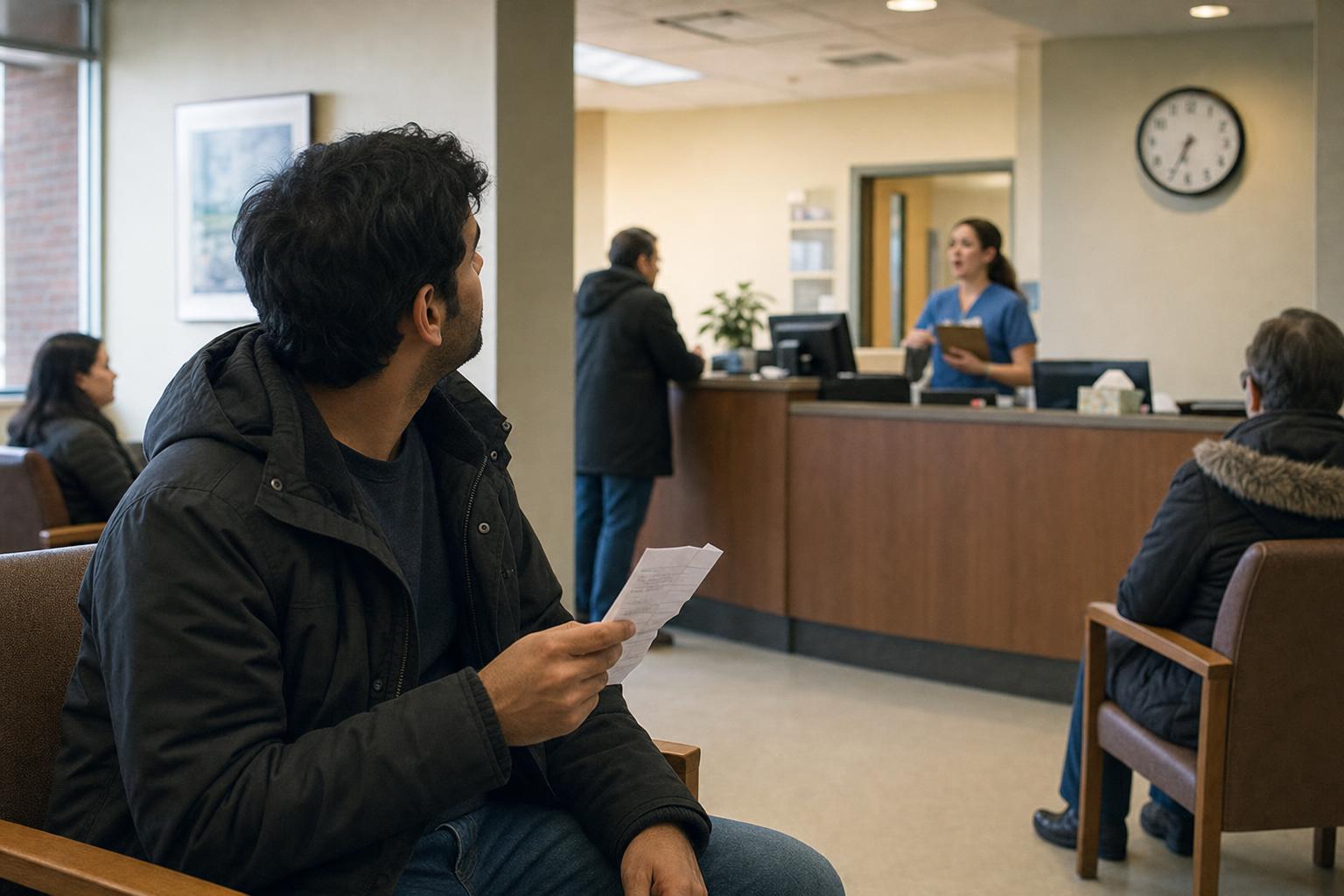
The case was straightforward, on paper. An applicant pursuing Canadian permanent residence from within Canada completed an immigration medical exam in 2024. Guidance for in-Canada applicants suggested that medical exams could be reused for up to five years. So the applicant held onto the completed exam and, in time, filed a PR application, expecting the 2024 result to carry it.
The application was returned as incomplete. The refusal letter didn't dispute the applicant's eligibility, the exam's validity as a medical document, or anything about the underlying case. It cited a different rule entirely: the exam had been assessed more than 12 months before the PR application was received. By that measure, the exam counted as too old — even though, by the five-year rule, it should have still been usable.
Nothing in the applicant's account was wrong. The exam was recent. The guidance about a five-year reuse window was real. The applicant read the rule that was written for people in their position and acted on it correctly. And it still wasn't enough.
That's the part worth sitting with. This wasn't a case of missing paperwork or a disqualifying fact. It was a case of two clocks running at once — one public and reassuring ("five years"), one narrower and mostly invisible until it's invoked ("assessed within 12 months of filing") — and the applicant only ever knew about the first one.
This is what it looks like to be Timing Blind. It isn't picking the wrong moment to file. It's assuming the timeline you're tracking is the one that actually governs your case. The applicant didn't own the clock — they were living by a version of it that looked complete but wasn't. The five-year figure wasn't false; it just wasn't the operative constraint.
There's a second layer here, too. The time between completing the exam and filing the application wasn't a passive gap — it wasn't "just waiting." It was quietly consuming the shelf life of a document the applicant had already submitted correctly. The delay itself became the defect. No error was introduced along the way; the application simply aged out from underneath the applicant, without anything visibly changing.
Whether this particular case can still be reopened, or the exam retaken and the application resubmitted, is now the applicant's most immediate problem — and one that depends on process, not on the medical facts, which were never in question.
The broader shape of it is what matters beyond this one case: a rule can look like protection and still not be the rule that's enforced. Knowing a friendly deadline exists is not the same as knowing which clock someone else is actually reading.
A friendlier rule isn't always the one that gets enforced. Check which clock actually governs your file in the Canada country guide: https://immimaps.com/articles/guides/country-guides/canada