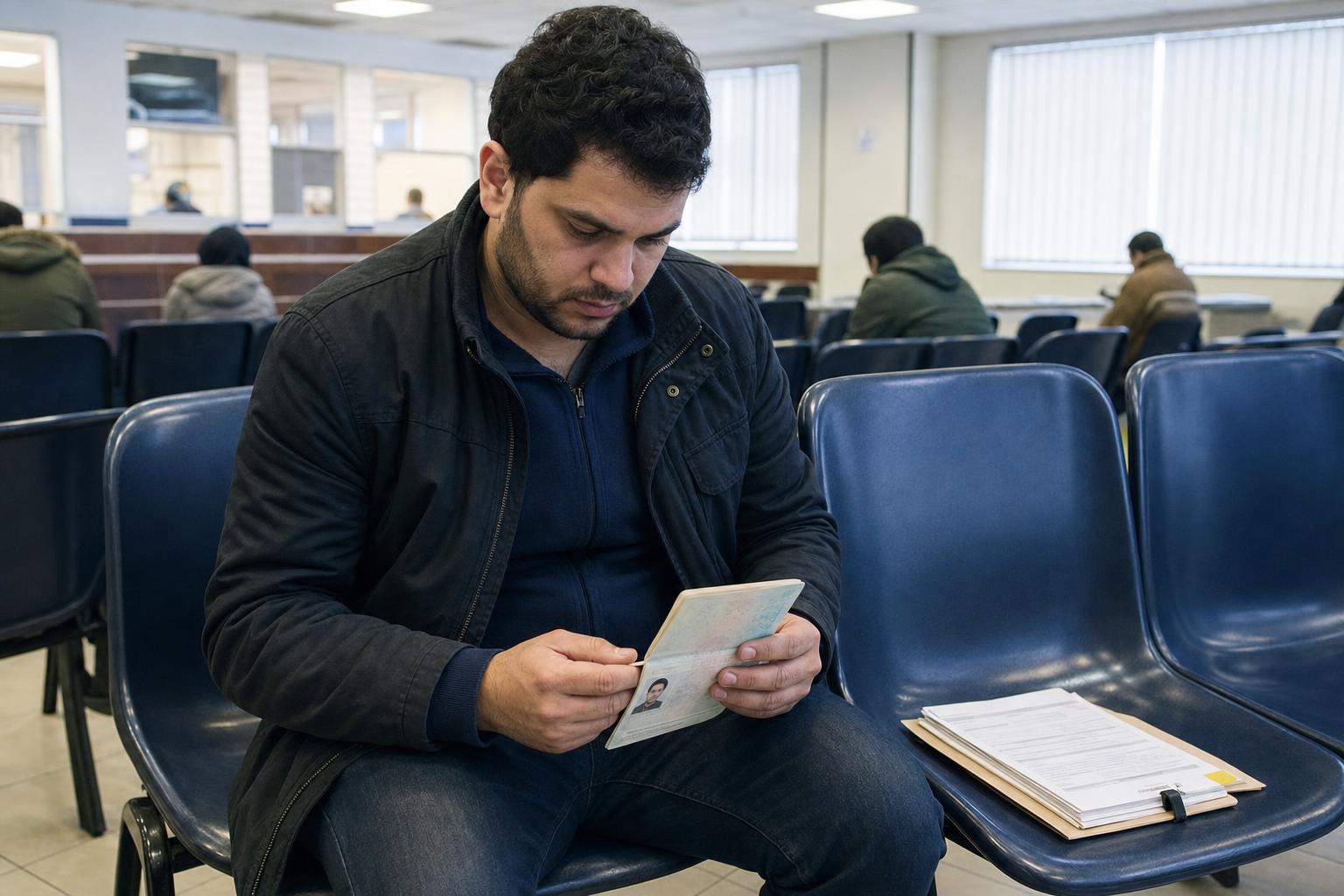
The Ten-Day Passport Rule That Sank a Six-Month Spain Visa Application A San Francisco applicant did nearly everything right for a Spain Non-Lucrative Visa — except ask the one question that mattered.
In February 2026, an applicant in San Francisco arrived at their BLS appointment for the Spain Non-Lucrative Visa (NLV) after six months of preparation. Financial documents were in order. The paperwork was complete. The passport, by any ordinary measure, looked fine — nearly a year of validity remained on it.
It was refused anyway. No exception was granted.
The requirement was not that the passport be "valid for about a year." It was that the passport be valid for a full year measured from the appointment date itself. The applicant's passport fell ten days short of that mark. Not expired. Not close to expired. Just ten days under a line that admits no rounding.
This is where the pattern is worth naming plainly: the applicant wasn't missing information. They were checking the wrong thing. Somewhere in six months of preparation, they had asked themselves "is my passport still valid enough?" — and gotten a reassuring answer. That is a real question, and it has a real answer. It simply is not the question the counter was going to ask. The counter's question was narrower and more mechanical: does this document clear a specific validity threshold, measured from a specific date, with zero tolerance for the gap.
Two different questions. Only one of them protected the application.
That is what makes a "no exception" refusal different from an obscure or unfair rule. The Spanish NLV process itself, per the requirements on file, is not unusually strict compared to other steps in the pathway — the total cost of entry is modest, and the bigger structural facts (that residency stays temporary and must be renewed, that funds must be demonstrated rather than transferred) sit elsewhere in the process. The passport-validity gate is just one line item. But it's a line item measured against a date the applicant doesn't control — the appointment date — not the date they happened to check their passport.
Six months of preparation, undone by ten days, is not a story about carelessness. It's a story about where attention gets spent. A person can spend months confirming financial documents, tenancy proof, income thresholds — the parts of the file that feel high-stakes — while a passport sitting in a drawer, "obviously fine," never gets checked against the actual gate it will be measured on.
The lesson generalizes past this one visa type. Every application has a handful of exact, unforgiving gates buried inside a much larger pile of paperwork that feels more urgent. The gates rarely announce themselves as the important part.
What have you actually verified, and what do you only feel reassured about?